HEPA Replacement: From "Time" to "Condition"
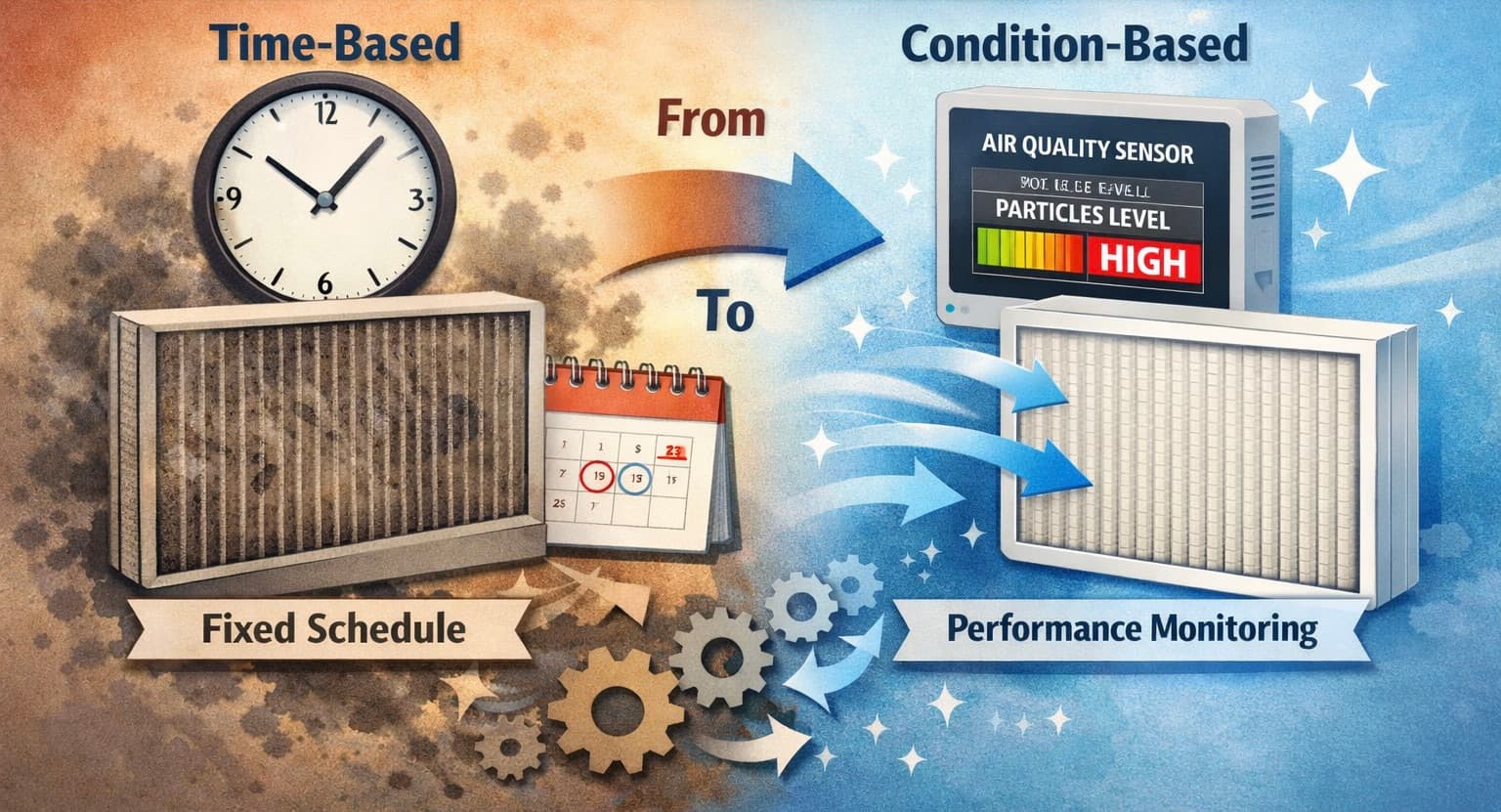
"18-Month Uniform Replacement" is Worth Reviewing
In many pharmaceutical facilities, the rule "replace HEPA filters every 18 months" is operational. However, when checking the rationale, reasons like "long-standing custom" or "manufacturer recommendation (on the safe side)" are common, and often not based on the facility's own operational data.
From Time-Based (TBM) to Condition-Based (CBM)
Filter life depends heavily on operating hours, outside air quality, pre-filter replacement frequency, and operational conditions. Disposing of filters that still maintain sufficient performance is not only a waste of cost but also leads to increased environmental load (Scope 3 emissions) due to waste disposal.
Implementation Approach
- Enhanced Differential Pressure Monitoring: Reset the differential pressure values that serve as replacement criteria and monitor trends.
- Utilization of Integrity Tests: If periodic tests can guarantee performance, they serve as a basis for extending the usage period.
There are cases where this shift extended replacement frequency by 2-3 times, achieving cost reductions of millions of yen annually and reducing waste.